Oak Mini Rack 8HE – Bringing Forest-Grade Stability to My Homelab
How I built a solid oak 10-inch mini rack that blends into my living space while running a full Proxmox homelab.

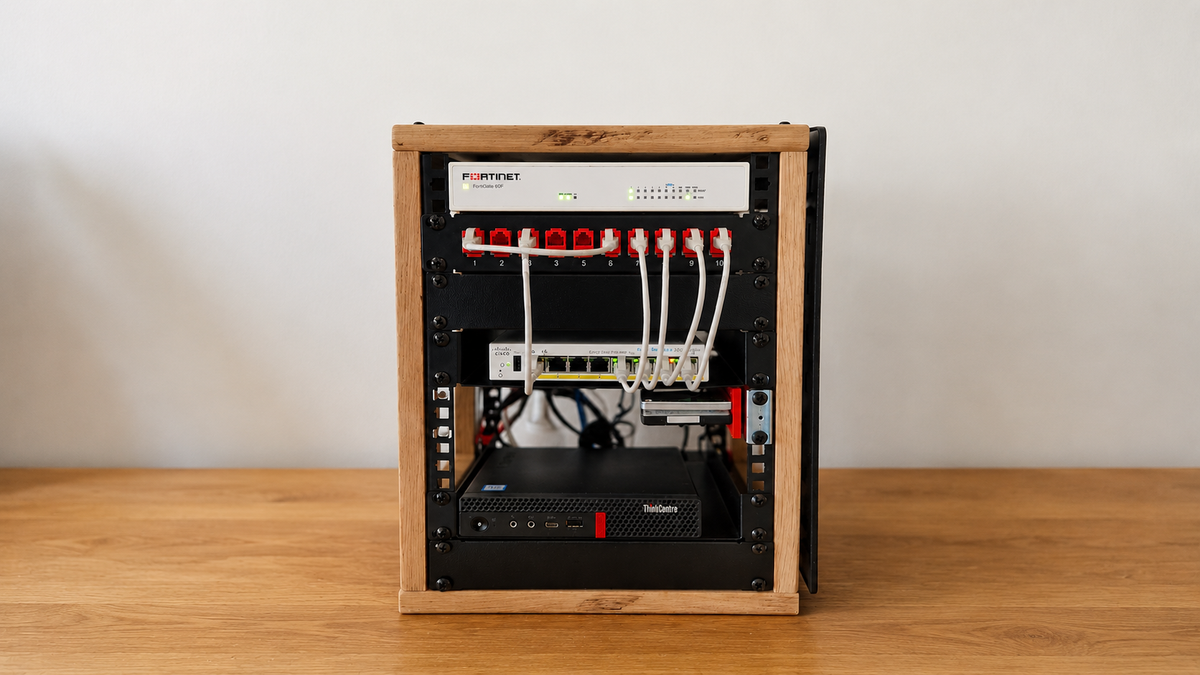
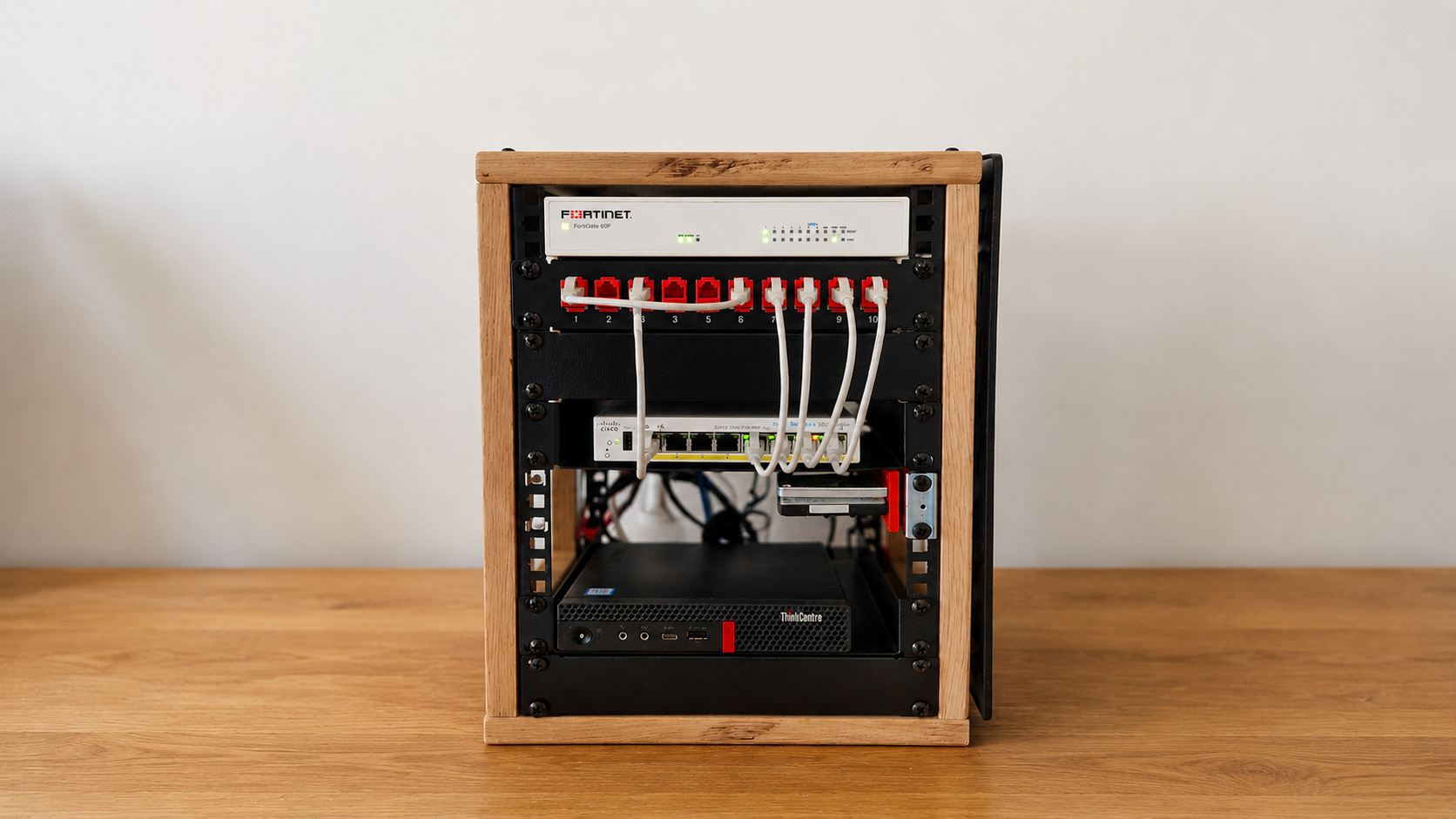
When I first discovered Jeff Geerling's Mini Rack project, I immediately loved the idea of having a compact homelab that doesn't dominate an entire room.
There was only one problem.
Most mini racks still look like networking equipment.
I wanted something that could live in my office—or even the living room—without looking out of place. That became the starting point for building my own 8U oak mini rack.
Idea
Instead of designing another aluminum frame, I wanted to combine traditional woodworking with modern homelab hardware.
The goal was simple:
- blend naturally into a living space
- remain fully modular
- keep excellent airflow
- still function as a serious homelab
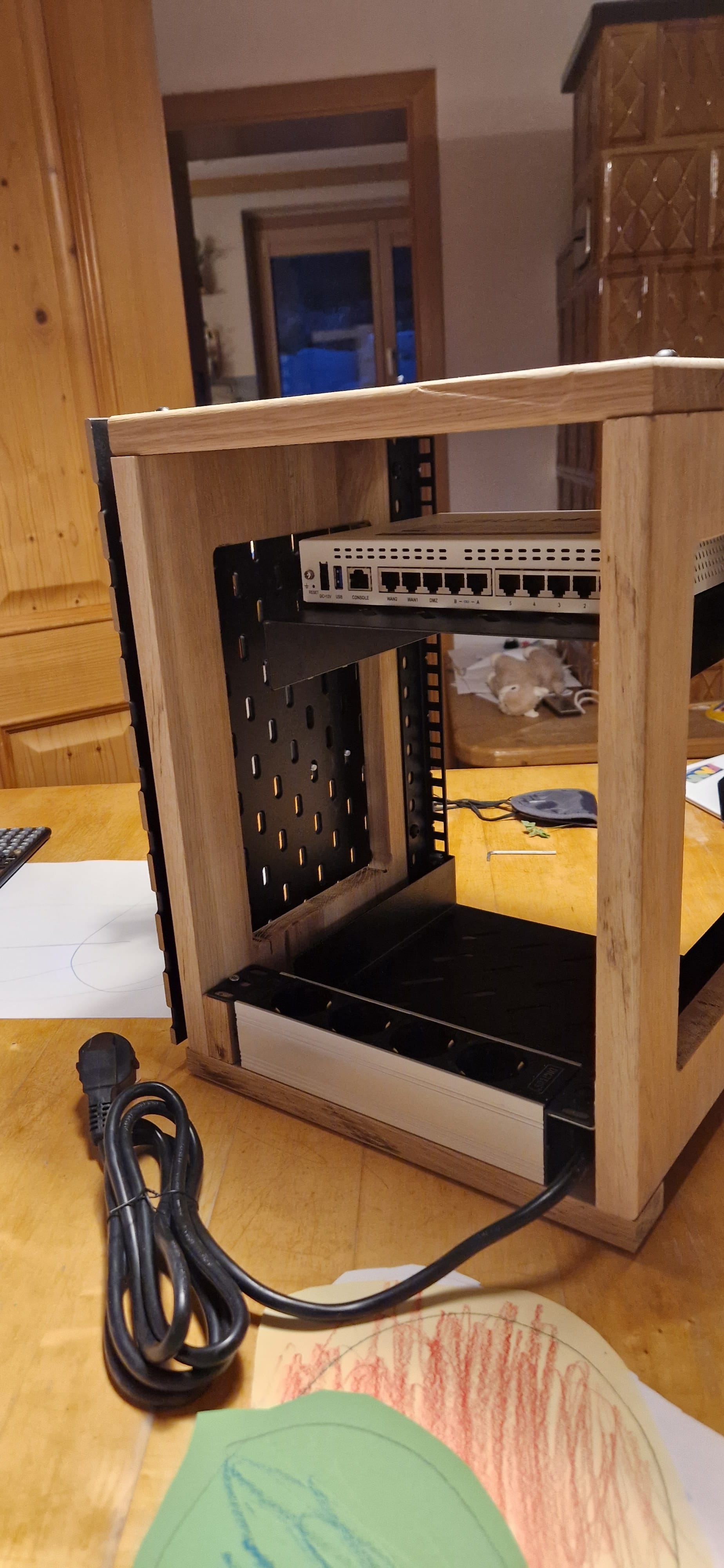
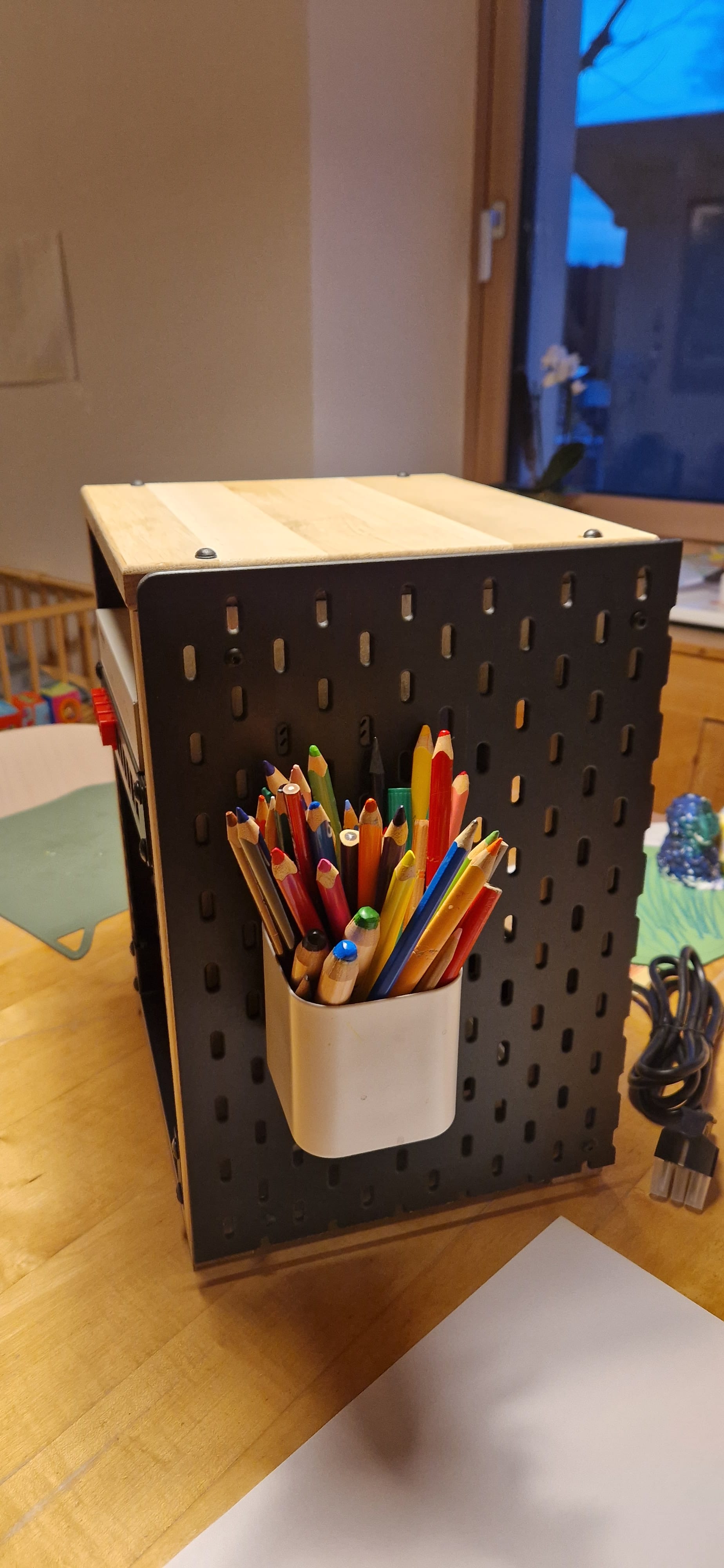
The result is a rack built from solid oak, combined with IKEA SKÅDIS pegboards as lightweight side panels.
The warm wood completely changes the appearance of networking equipment. Rather than looking like a server cabinet, it feels more like a piece of furniture.
Hardware
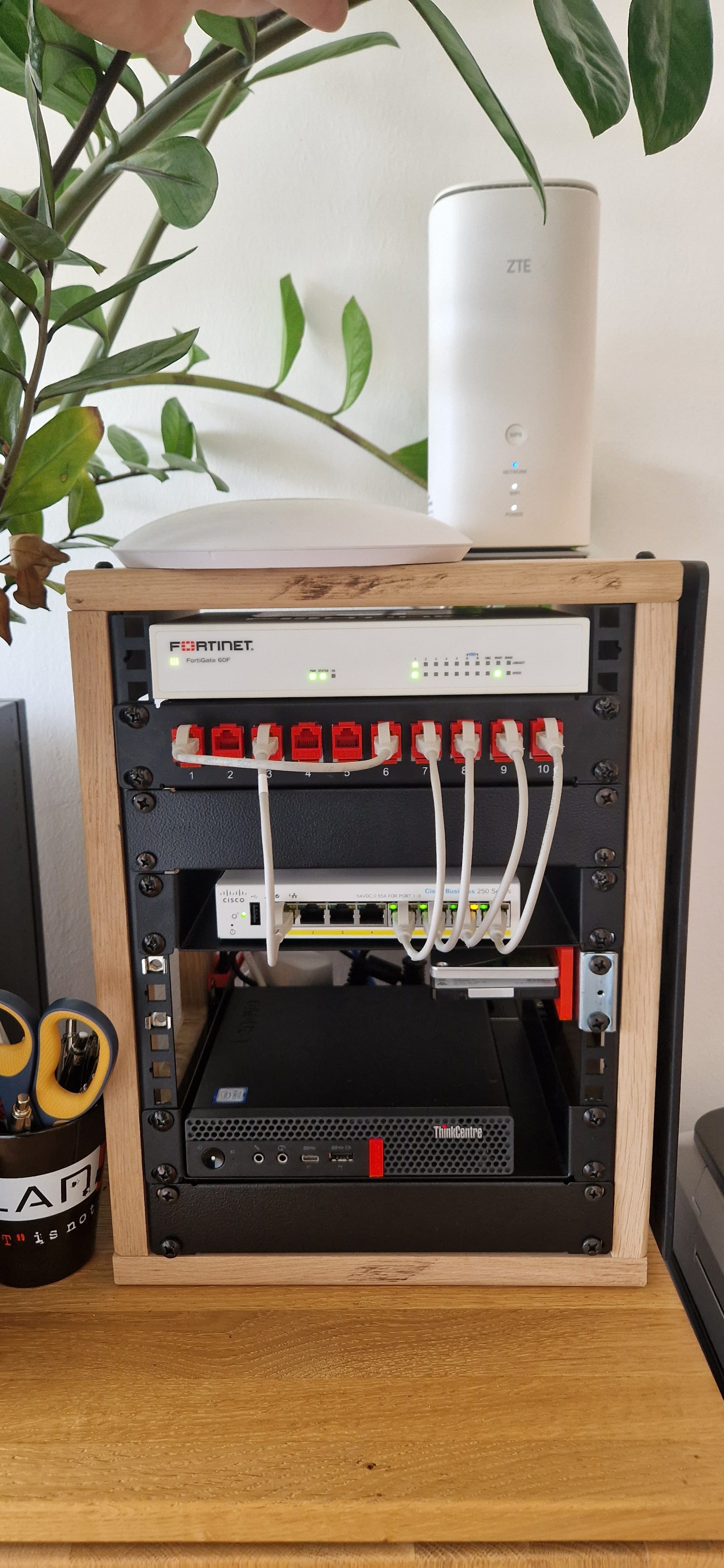
The rack currently contains:
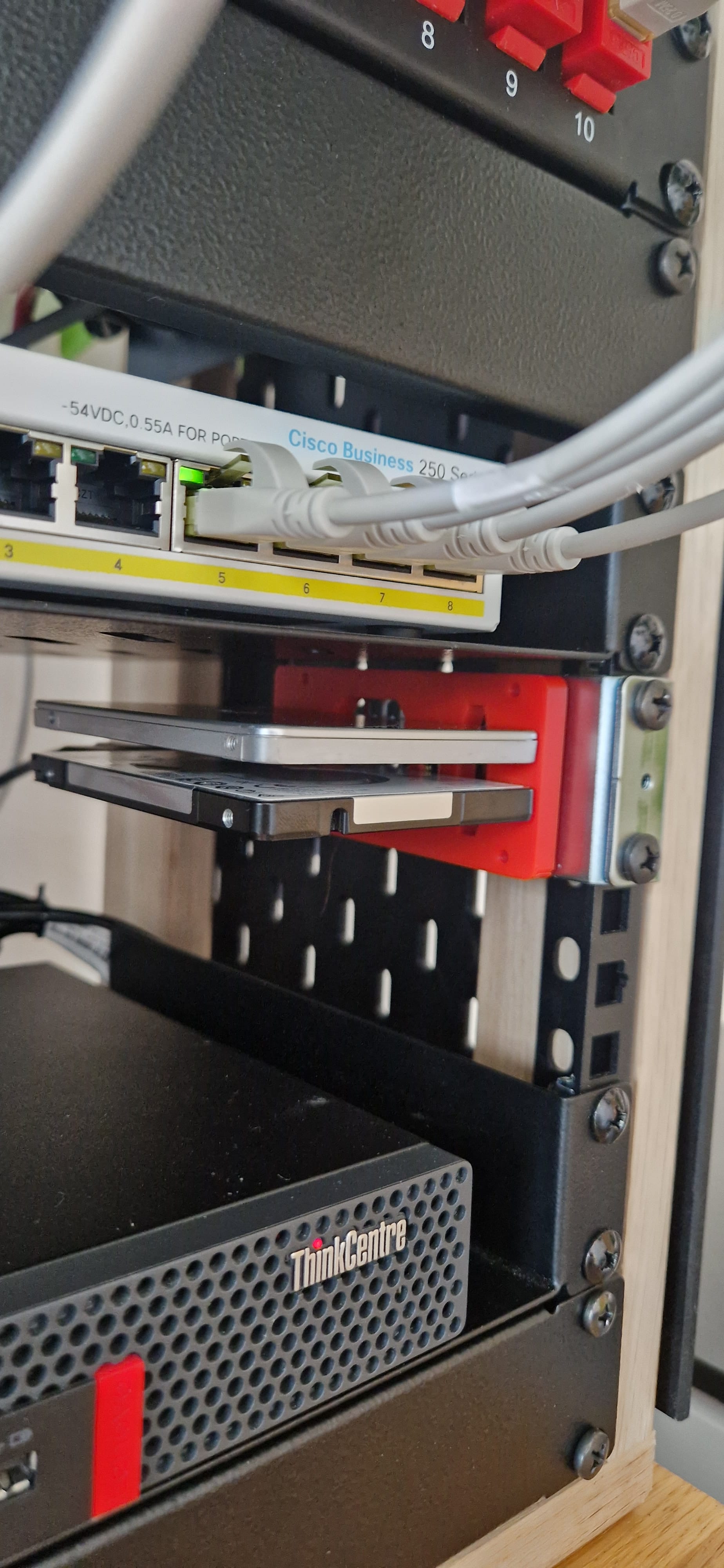
- Fortinet FortiGate 60F
- Cisco Business 250 Series Switch
- Lenovo ThinkCentre M720q running Proxmox VE
- Patch Panel
- SSD Mount
- Wi-Fi Access Point
- LTE Router
- Internal Power Strip
Everything fits into a compact 10-inch format while remaining easy to access.
Why Oak?
I'm definitely not a carpenter.
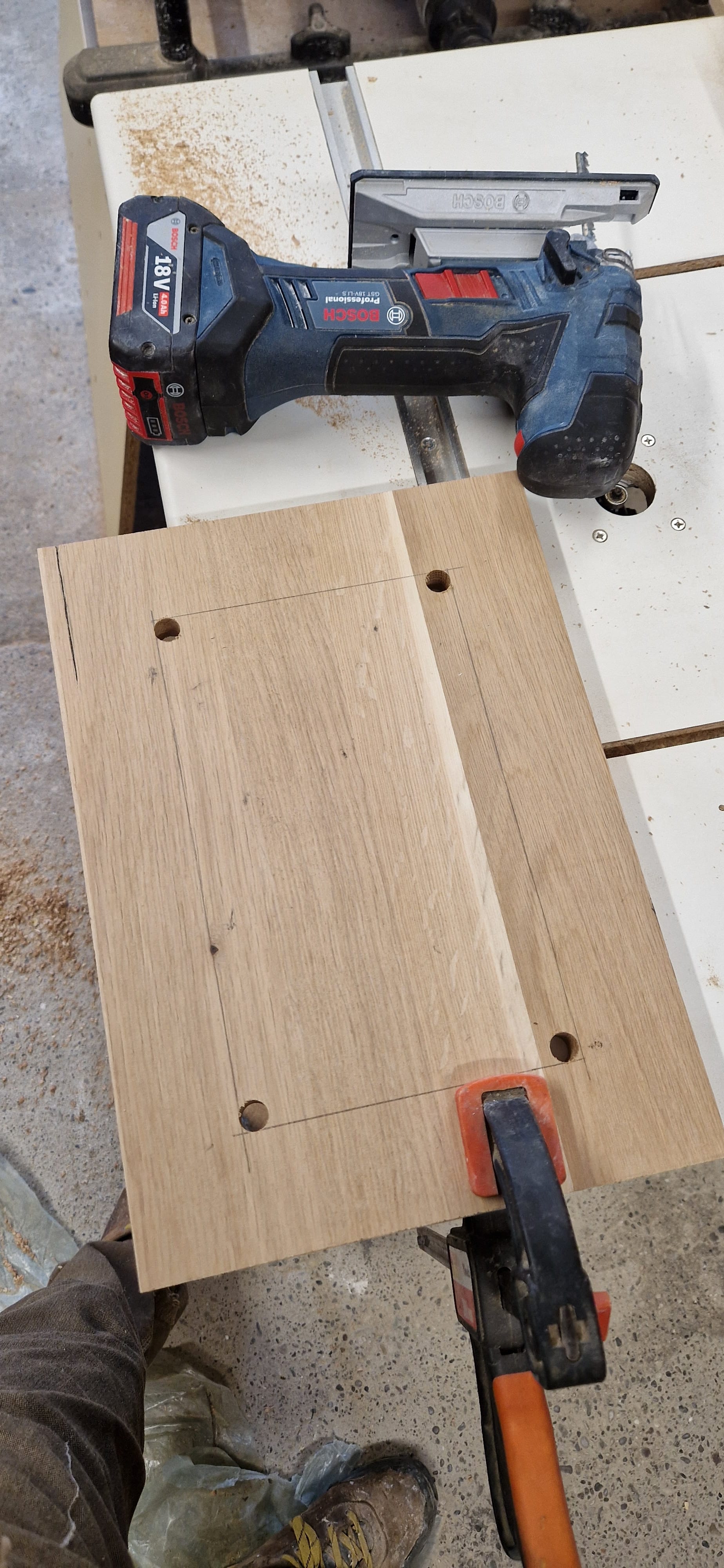
This project was built using fairly basic tools:
- Circular saw
- Jigsaw
- Homemade router table
- Drill
Despite my limited woodworking experience, oak turned out to be an excellent material.
Besides being incredibly sturdy, it gives the rack a timeless appearance. Every board has its own grain, making every build unique.
Instead of trying to hide the technical equipment, the wood complements it.
IKEA SKÅDIS as Side Panels
One of my favorite decisions was using IKEA SKÅDIS pegboards.
They provide several advantages:
- lightweight construction
- excellent airflow
- easy mounting of accessories
- clean Scandinavian look
Unexpectedly, they fit perfectly into the overall design.
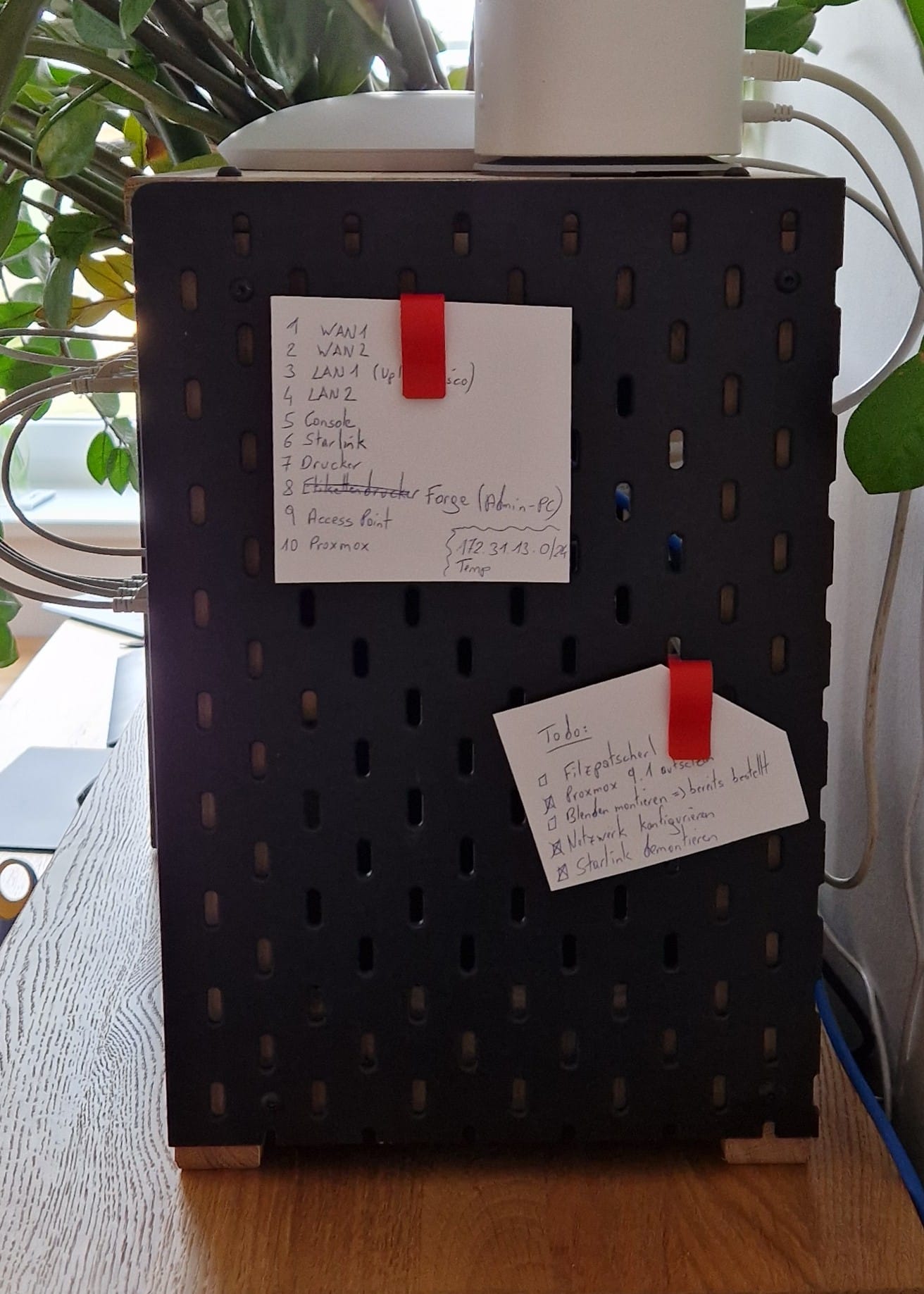
3D Printed Patch Notes
One small feature has become one of my favorites.
I designed small 3D-printed clips that hold paper labels directly on the pegboard.
Instead of opening network documentation every time I change something, I simply update the paper note.
Sometimes the simplest solutions are still the best.
Running Proxmox
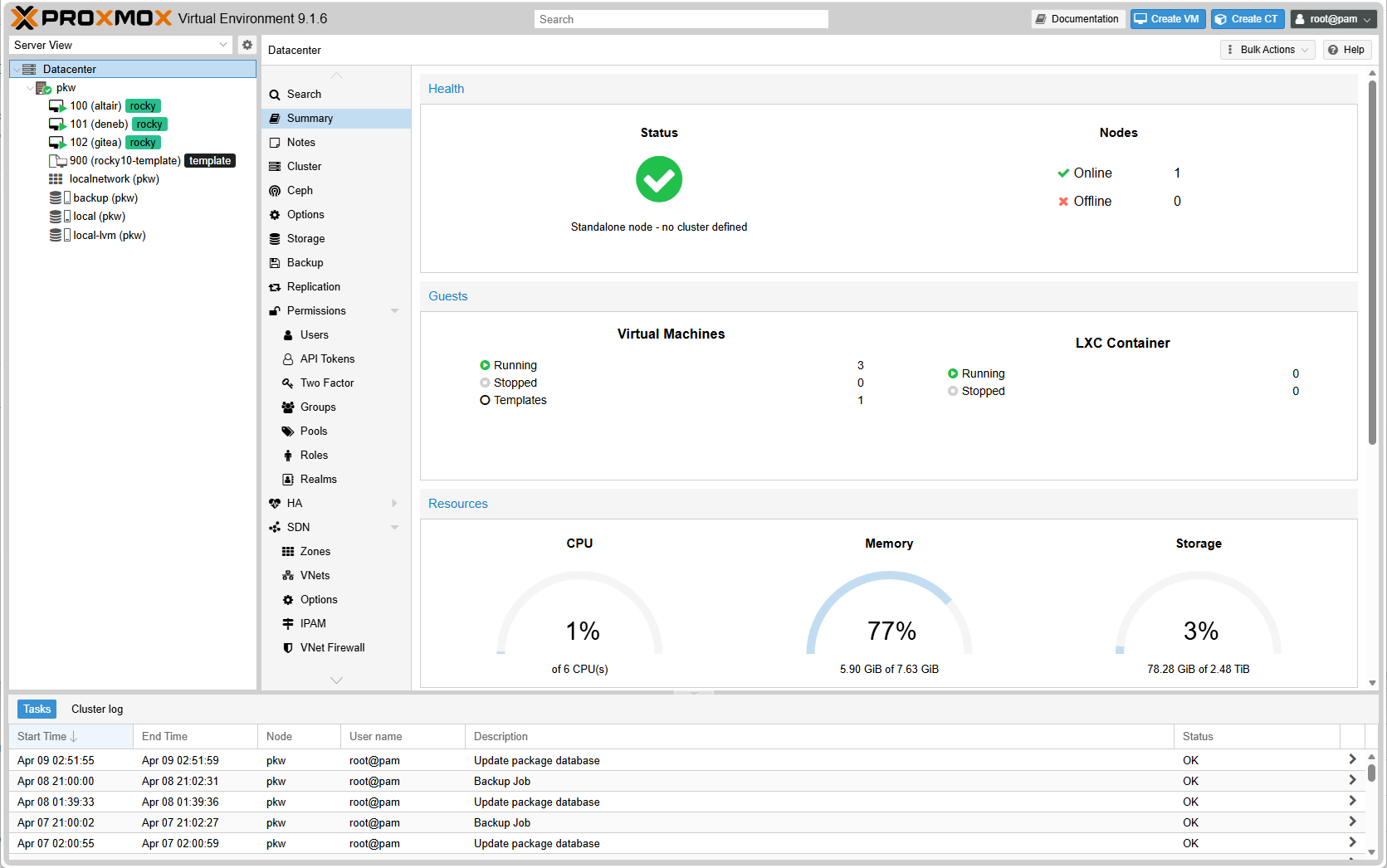
The Lenovo ThinkCentre runs Proxmox VE and hosts the majority of my home infrastructure.
The focus isn't on building a huge cluster but on running lightweight, reliable services for everyday use.
Typical workloads include:
- Docker containers
- Network services
- Monitoring
- Automation
- Development environments
- Internal infrastructure
The rack keeps everything organized while remaining compact enough to disappear into everyday living spaces.
Building Something That Doesn't Look Like a Server
One thing I often notice about homelabs is that they are designed only for function.
This project tried to balance functionality and design.
Networking equipment doesn't have to look industrial.
With natural materials and a bit of planning, a homelab can become something you're actually happy to display instead of hide.
For me, that's exactly what this oak mini rack achieved.
Gallery
Final Thoughts
This project reminded me that building infrastructure can also be creative.
It doesn't always need to be another black metal cabinet.
Sometimes a few pieces of oak are enough to completely change the character of a homelab.
If you're thinking about building your own mini rack, I can highly recommend experimenting with materials outside the usual aluminum profiles.
You might end up with something that fits your home just as well as your hardware.